
Tarneit is one of the newest suburbs we work in, and that creates a problem nobody warns you about: a brand-new slab is not automatically ready to be coated. Age of the concrete is the first thing we ask about.
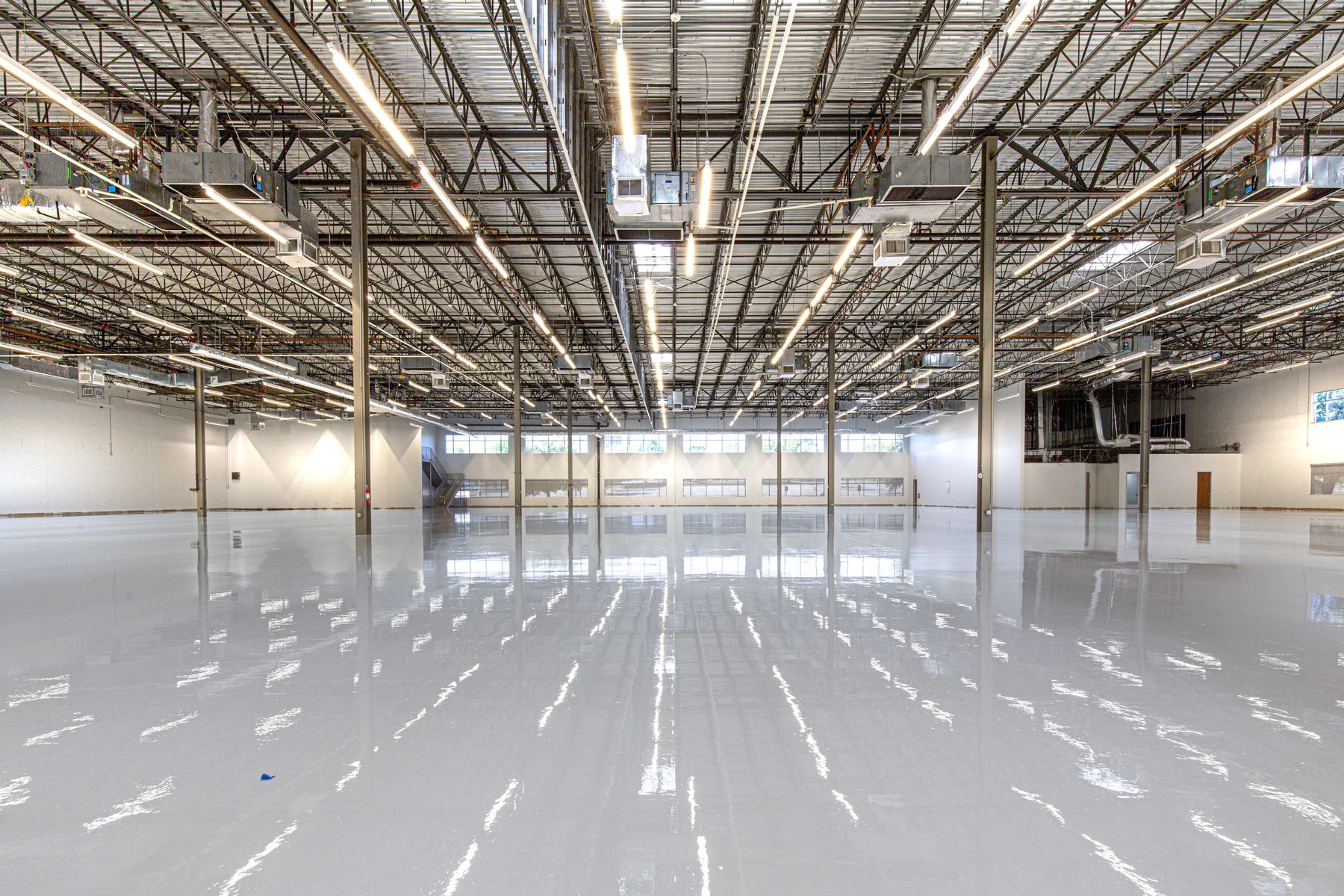
Floor shown is a visualisation — stock reference photography, not a completed Ironclad job.
Tarneit is about as new as Melbourne gets. There were a few hundred people here in 2001 and over twenty thousand a decade later, and estates like Riverdale, Newhaven, Grange and Tarneit Gardens are still handing over homes. There is effectively no pre-2000 housing stock. So the garages we quote here often sit on a slab that is months old rather than decades.
Fresh concrete carries a lot of water and takes time to lose it. Coating manufacturers typically require a slab to be at least 28 days old before anything goes on it — but age alone doesn't decide it, and the data sheets say so themselves. Coat a slab that is still giving up water and that water collects under the film and pushes it off. We moisture test before a drop goes down, and on a new Tarneit build the test is about how wet the concrete still is, not whether an old membrane failed.
The ground is the other Tarneit factor. This is the basaltic Werribee plain, and the precinct structure plan geotechnical work for the area is blunt about it: clay derived from basalt is likely to be subject to considerable shrinkage or swelling, and highly expansive clay can cause unexpected ground movements. Thin topsoil sits over sodic, strongly alkaline heavy clay. Slabs here are engineered for that, and fine shrinkage cracking and movement at control joints in the first few years is normal rather than alarming. What matters is that those joints are treated properly instead of being bridged with coating and left to reopen through the finish.
Under 20 years, and often under 5. Slab age is the first question we ask.
Double around 36 m², frequently extended or tandem on the larger estate lots.
Raw builder's slab — saw cuts, trowel marks, mortar splatter and a step down to the door.
Same four stages on every job in Tarneit, residential or commercial. No shortcuts, because we're the ones carrying the guarantee.
Diamond-ground back to bare, open concrete. Not acid-etched, not rolled over. Dust-extracted, so the garage stays clean.
Moisture tested before a drop goes down. Cracks and joints are cut out and filled so they don't telegraph through the finish.
Pigmented base coat, then decorative flake broadcast to refusal for full coverage, grip and depth. Your colour, chosen before we arrive.
Clear coat over the top, edges cut in sharp, site cleaned. You get the guarantee in writing before we leave.
One day on site. Walk on it after 24 hours, car back on it at 48. Gear moved and put back — you don't lift a thing. Written guarantee against lifting, and it transfers if you sell.
Tarneit is a short run from our usual Wyndham route, so scheduling is straightforward. The practical issue in the newer stages is parking and kerb space — some streets are still shared with construction traffic and there is not much room to work off the road.
If your home is a recent handover, dig out the date the slab was poured before you contact us. It is the single piece of information that decides whether we book you in now or tell you to wait a few weeks. We would rather give you that answer up front than coat something too early and end up back there.
Not always. New concrete needs to cure before it takes a coating — 28 days is the figure usually quoted as a minimum, and the manufacturer's data sheet for the system governs. We moisture test to confirm rather than guessing from the calendar. If it is too early we will tell you when to come back.
Fine shrinkage cracking is common on reactive clay sites and is usually cosmetic. We cut out and fill cracks and treat control joints as part of the preparation so they don't telegraph through the finish. If we see something that looks structural rather than cosmetic, we say so — that is an engineer's call, not a floor coater's.
No, and be sceptical of anyone who says it will. A resin floor is a few millimetres of surface — it doesn't restrain a slab on reactive clay. What it does is bond properly to a prepared surface and stay bonded, which is what the written guarantee against lifting covers.
More general questions are answered on the main FAQ, and Melbourne-wide answers — cost, systems, timing — live on the epoxy flooring Melbourne page.
One photo and rough dimensions is all we need to give you a real number — no site visit required. Quotes weekdays 7am–7pm.
Get my price →