
Epping splits three ways: the established streets built out from the 1970s, the newer estates of Epping North, and one of Melbourne's biggest food and logistics precincts around Cooper Street. We coat floors in all three, and they are three different jobs.
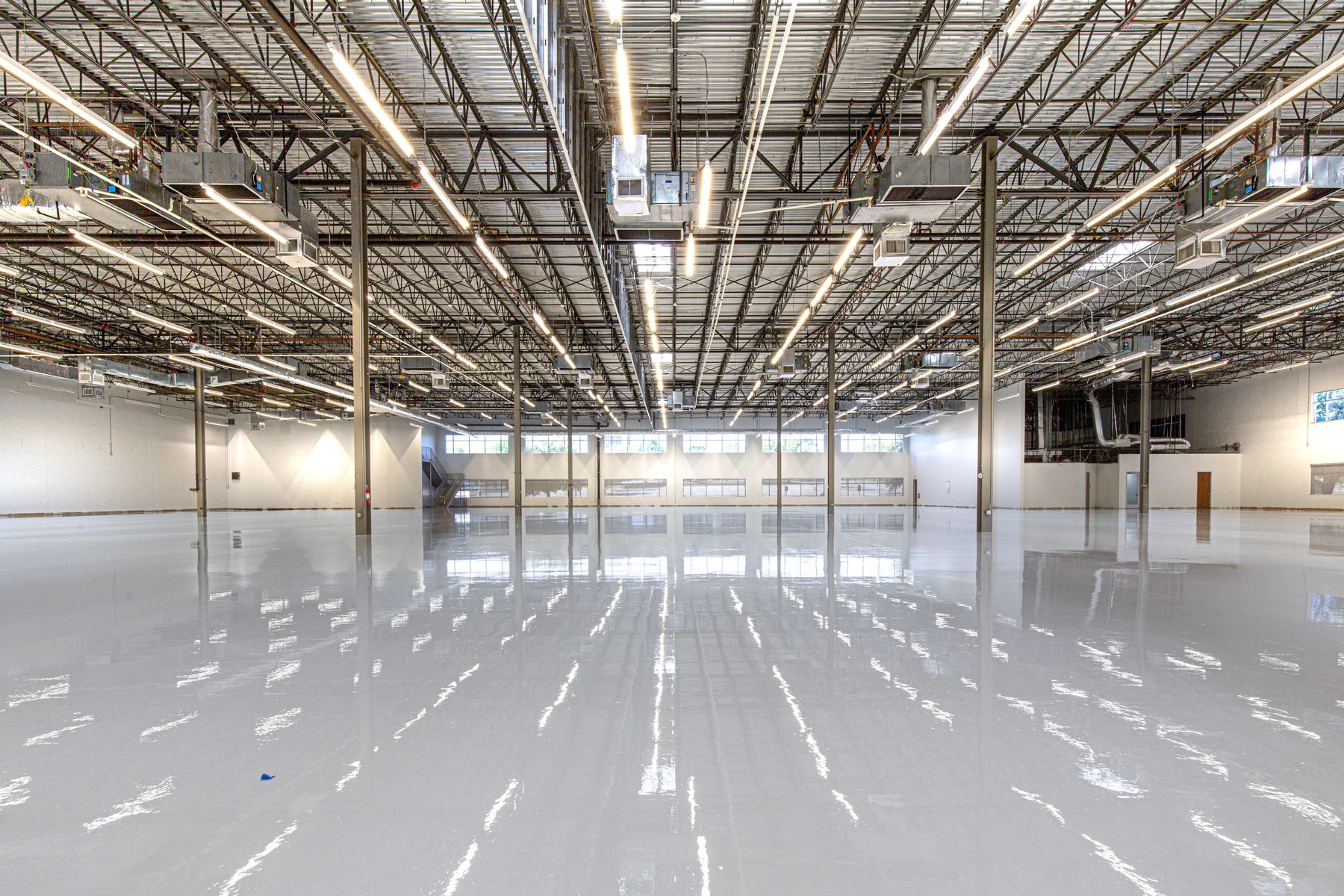
Floor shown is a visualisation — stock reference photography, not a completed Ironclad job.
Established Epping — the streets around Dalton Road and High Street — was largely built out through the 1970s and 1980s on the northern basalt plain. Those slabs predate the prescriptive under-slab vapour barrier requirement, which arrived with the 1996 Building Code and applied in Victoria from August 1997, so moisture coming up through the concrete is a possibility we test for rather than a theory. Most of these garages have also had something on the floor before — hardware-store paint, carpet glue from a rumpus-room phase — and all of it comes off before anything goes down.
Epping North is standard growth-corridor stock: post-2005 estates with 36-square-metre doubles on young, generally sound slabs. The question there is the same as Craigieburn or Tarneit — how old is the concrete, and has it finished curing. Manufacturers typically want at least 28 days, and we moisture test to confirm.
Then there is the working side of the suburb. The Cooper Street corridor is a major employment precinct, and since the wholesale fruit and vegetable market moved to Epping in 2015 the area around it has filled with food logistics, cold storage and light industrial units. Those floors are power-floated commercial slabs — dense, closed surfaces that look like a perfect canvas and are nearly the opposite. They have to be diamond-ground to open the surface, and the work is usually staged so the business keeps trading.
1970s–1980s in established Epping; post-2005 in Epping North; industrial slabs of every era off Cooper Street.
Older singles around 18–20 m² near the town centre, modern doubles in the estates.
Old paint and glue in the established streets, raw builder's concrete in the north, burnished slabs in the precinct.
Same four stages on every job in Epping, residential or commercial. No shortcuts, because we're the ones carrying the guarantee.
Diamond-ground back to bare, open concrete. Not acid-etched, not rolled over. Dust-extracted, so the garage stays clean.
Moisture tested before a drop goes down. Cracks and joints are cut out and filled so they don't telegraph through the finish.
Pigmented base coat, then decorative flake broadcast to refusal for full coverage, grip and depth. Your colour, chosen before we arrive.
Clear coat over the top, edges cut in sharp, site cleaned. You get the guarantee in writing before we leave.
One day on site. Walk on it after 24 hours, car back on it at 48. Gear moved and put back — you don't lift a thing. Written guarantee against lifting, and it transfers if you sell.
Residential access is easy on the established streets — wide frontages, room for the truck — and tighter in the newer estates, where we sort parking before the day rather than improvising. The one thing to flag on an older garage is power: a single shared 10-amp circuit won't run a grinder and an extractor together, so tell us and we bring our own.
Commercial work around Cooper Street is a different conversation and starts with when the floor can be out of service. Food-adjacent premises usually need the work staged, documented and done out of hours — that is normal for us, and it gets planned into the quote rather than discovered on the day.
We coat warehouse, storage and back-of-house floors, staged so you keep trading, with out-of-hours work as standard. If your premises need a specific certified system for food-contact areas, we say so up front and spec accordingly rather than pretending every floor is the same job.
Maybe — that is exactly what the moisture test answers. A slab of this era can be perfectly dry or it can be drawing moisture through a missing vapour barrier. We test before a drop goes down; if the reading is high we tell you what it means, and if the floor isn't a candidate we say so rather than coating it and hoping.
Once the slab is ready, yes — one day on site, walk on it at 24 hours, car back on it at 48. The only thing that delays a new build is concrete that hasn't finished curing, which is why the slab pour date is the first thing we ask for.
More general questions are answered on the main FAQ, and Melbourne-wide answers — cost, systems, timing — live on the epoxy flooring Melbourne page.
One photo and rough dimensions is all we need to give you a real number — no site visit required. Quotes weekdays 7am–7pm.
Get my price →