
Every garage floor quote in Melbourne says "epoxy" somewhere, and half of them are quoting different chemistry. The difference decides when your car goes back on the floor, whether the finish ambers in sunlight, and what the guarantee is actually worth. Here is the version without the sales gloss.
Floor shown is a visualisation — stock reference photography, not a completed Ironclad job.
Epoxy and polyaspartic are both two-part resins that cure into a hard film on concrete. The practical differences are speed, UV behaviour and where each one is strongest — and the strongest residential garage systems commonly use both: a base for build and adhesion, flake broadcast to refusal into it, and a fast-curing, UV-stable clear topcoat over the top. That layered build is what makes a genuine one-day install possible.
We quote two days on site, foot traffic at 24 hours and the car back on it three to four days later — and those numbers go in writing on your quote, not off a sales script. A slower build than that is common. A faster one is a chemistry claim, and it is fair to ask which product makes it possible.
That gives you a simple test for any Melbourne quote, including ours: ask for the product names in the system and the data-sheet times for foot and vehicle traffic. If someone promises next-morning parking on a slow-curing system, one of two things is happening — they don't know their own product, or they're hoping you won't check. Neither belongs anywhere near your slab.
And keep the main thing the main thing: chemistry decides the timeline, but preparation decides whether the floor stays down at all. A polyaspartic on an unground slab fails exactly the way a cheap epoxy does. The failure mechanics are in why epoxy floors fail, and both chemistries get the same four stages from us: grind, test, flake, seal.
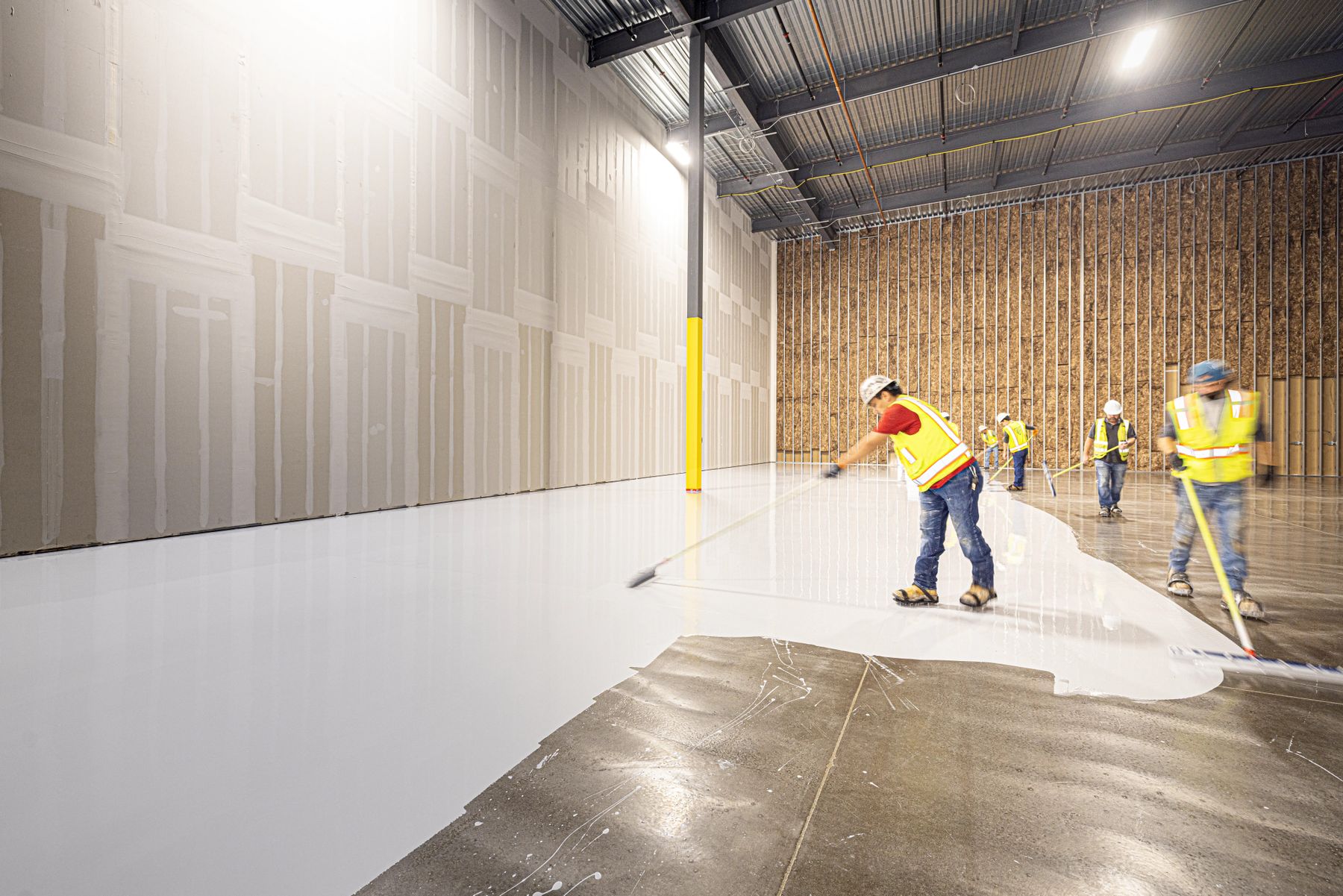
They do different jobs, and strong residential systems commonly use both — a base for build and adhesion, a polyaspartic or polyurea topcoat for UV stability and fast return to service. What matters more than the label is the preparation underneath: no chemistry survives an unground or damp slab.
Topcoat chemistry. Traditional epoxy topcoats cure slowly — data sheets commonly specify days before vehicle traffic. Polyaspartics cure much faster, which is what makes an honest one-day install possible. If someone promises next-morning parking on a full traditional epoxy build, ask to see the data sheet.
Unprotected epoxy can amber over time where sunlight reaches it — worth caring about if your garage gets afternoon sun through the door. A UV-stable topcoat is the standard answer.
Four things: the base coat and topcoat by product name; the data-sheet times for foot and vehicle traffic; whether the slab is diamond-ground and moisture tested; and exactly what the written guarantee covers. Honest installers answer all four without flinching.
Wondering what either system costs? See the Melbourne cost guide.
Send one photo of your garage and rough dimensions. Written quote back in under 15 minutes, weekdays 7am–7pm — with the system spelled out, not hidden behind the word "epoxy".
Get my price →