
Point Cook is almost entirely a post-2000 suburb, so we are usually working on a young, well-built slab. That changes the job — less remediation, more attention to finish, and a garage that is often half a living room already.
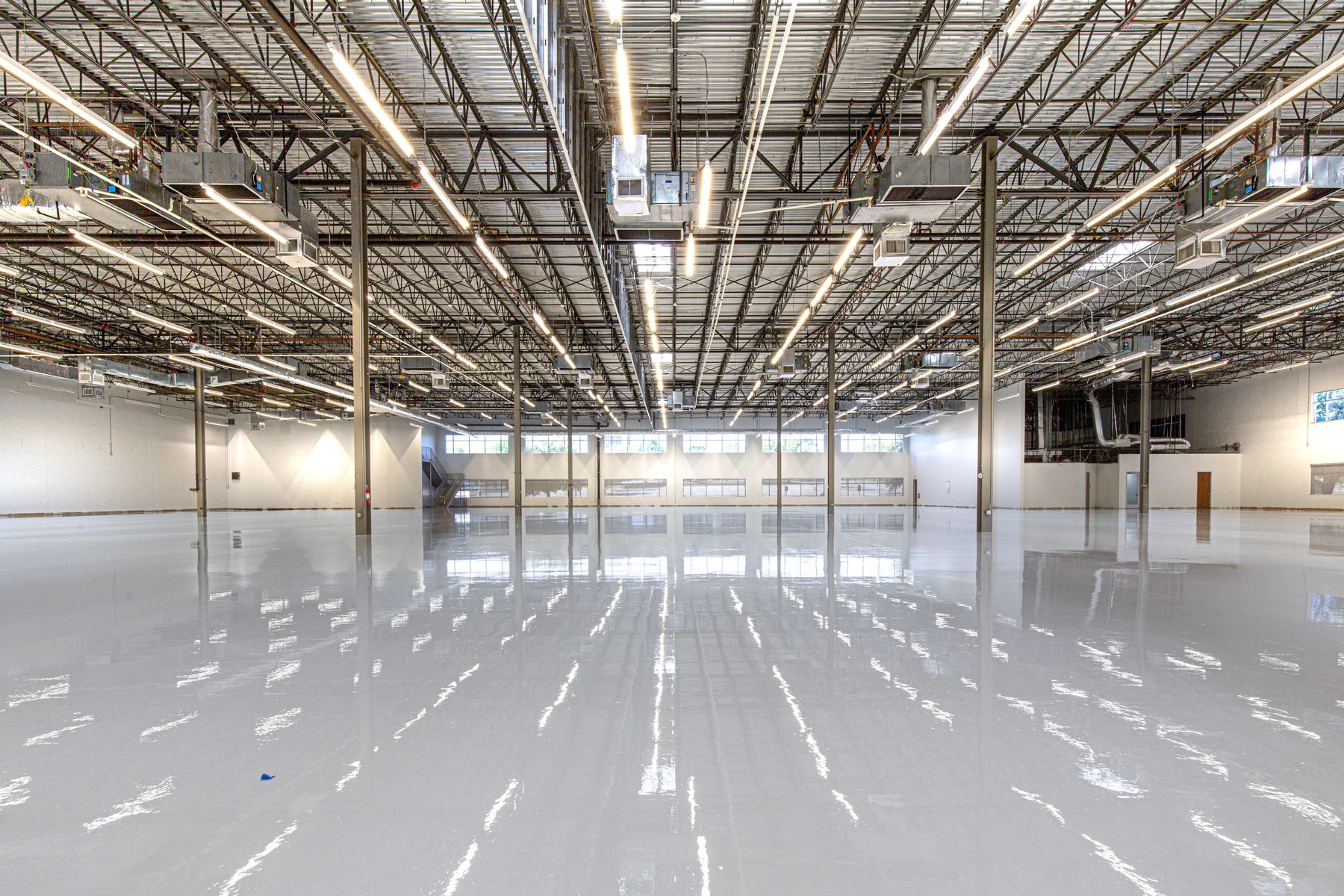
Floor shown is a visualisation — stock reference photography, not a completed Ironclad job.
The Point Cook estates — Sanctuary Lakes and Newminster first, then Boardwalk, Alamanda, Featherbrook and Innisfail — were built out from the late 1990s onward. There were fewer than two thousand people here in 2001 and close to fifty thousand by 2016. That timing matters: Victoria adopted the 1996 Building Code in August 1997, which is when an under-slab vapour barrier became a prescriptive requirement rather than a performance one. Almost every Point Cook slab is younger than that rule, so it typically tests dry and behaves predictably — a genuinely better starting point than the older suburbs up the road.
The ground is less uniform than the streets look. Geotechnical work across the western Wyndham plain describes a thin blanket of wind-blown silt over stiff, high-plasticity clay, with basalt refusal anywhere from under two metres to over six — and warns that the depth to basalt, and the boulders sitting in the residual clay, can change markedly over a short distance. Two houses in the same street can be on meaningfully different ground.
Then there is the salt. Cheetham Salt worked evaporation pans here from the 1920s until the early 1990s, Sanctuary Lakes was built over that ground, and its lake is deliberately kept saline with pumped sea water. This is a low-rainfall pocket with a relatively high soil salt content and groundwater too saline for irrigation in places. We are not going to tell you that has wrecked anybody's garage floor — we have no evidence of it and neither does anyone else. What it does mean is that a slab surface here can carry more contamination than an inland garage, and diamond grinding takes that off with the top of the concrete. One more reason the prep is not optional.
2000–2020. Modern construction, vapour barrier as standard.
Integrated double around 36 m², often with an internal door into the house and a laundry off it.
A sound bare slab with saw-cut control joints, builder's trowel marks and no prior coating.
Same four stages on every job in Point Cook, residential or commercial. No shortcuts, because we're the ones carrying the guarantee.
Diamond-ground back to bare, open concrete. Not acid-etched, not rolled over. Dust-extracted, so the garage stays clean.
Moisture tested before a drop goes down. Cracks and joints are cut out and filled so they don't telegraph through the finish.
Pigmented base coat, then decorative flake broadcast to refusal for full coverage, grip and depth. Your colour, chosen before we arrive.
Clear coat over the top, edges cut in sharp, site cleaned. You get the guarantee in writing before we leave.
One day on site. Walk on it after 24 hours, car back on it at 48. Gear moved and put back — you don't lift a thing. Written guarantee against lifting, and it transfers if you sell.
Two practical things about the newer estates. First, the driveways and streets are narrow, and in a lot of Point Cook courts there is nowhere to leave a truck for the day without blocking someone. We work off the driveway wherever we can, and we will ask you about it at quote stage rather than turning up and improvising.
Second, most Point Cook garages are integrated under the roofline with a door straight into the house. That makes dust control the difference between a good day and a bad one — the grinder runs on vacuum extraction and the internal door gets sealed before anything spins up. It is also why we ask about the topcoat and ventilation before the day: an internal-access garage needs the doors open and the house shut.
If you are in Sanctuary Lakes or another estate with a body corporate or design guidelines, worth a quick check on their rules for contractor hours and parking. An internal floor coating is not an external alteration, so it is not usually an approval matter — but the access rules are real.
That is most of what we do here. The flake is broadcast to refusal and clear sealed over the top, which gives you a hard, cleanable, textured surface — dropped weights, rubber mats, bikes, a car on it during the week. Tell us what actually happens in the room and we will spec the topcoat for it.
The grinding runs under vacuum extraction and we seal the internal door before we start, so dust stays in the garage. Odour depends on the system and we will tell you before the day what to expect and for how long. Plan on keeping the internal door shut and the roller door open while we work.
Not once it is cured. Salt air matters for the prep, not the finished floor — the slab surface picks up more airborne contamination near the water, and diamond grinding takes that off with the top of the concrete before anything is applied.
More general questions are answered on the main FAQ, and Melbourne-wide answers — cost, systems, timing — live on the epoxy flooring Melbourne page.
One photo and rough dimensions is all we need to give you a real number — no site visit required. Quotes weekdays 7am–7pm.
Get my price →