
Hoppers Crossing was one of Wyndham's first big estates, built out through the late seventies and eighties. Those slabs are now forty-odd years old, and a good share of them are on their second or third floor finish. That is the job here — removal as much as coating.
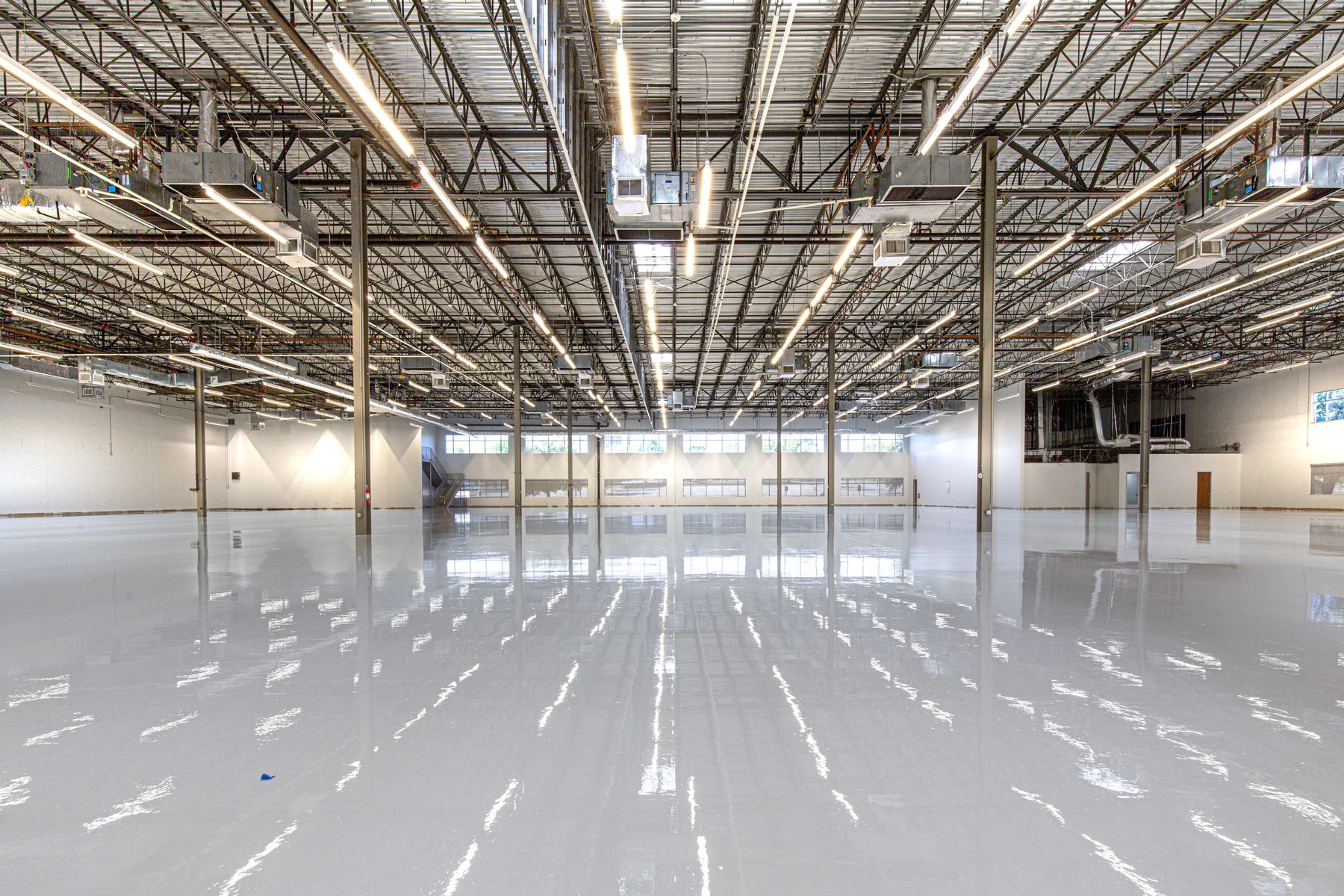
Floor shown is a visualisation — stock reference photography, not a completed Ironclad job.
Hoppers Crossing was subdivided from the early 1960s and grew hard through the seventies and eighties — the primary schools opened in 1970, Werribee Plaza in 1985. It has been full for a long time: the population has sat around thirty-seven thousand at every census since 2001. That is what makes it different from Tarneit or Truganina. There is almost no new build here. Everything is a retrofit onto an ageing slab.
Geologically it sits in the transition between the Werribee delta soils and the basalt plain proper, so we would rather not generalise about your block — the classification on your lot comes from a soil test, not from the postcode. By now, in any case, the slabs have done all the settling they are going to do, which is one real advantage of an older floor.
The disadvantage is everything that has happened on top since. A slab of this era predates the prescriptive under-slab vapour barrier rule, which arrived with the 1996 Building Code and applied in Victoria from August 1997 — so moisture coming up through the concrete is a live possibility rather than a theoretical one. And most of these garages have already had something on the floor: hardware-store paint in the eighties, or a thin single-coat epoxy sold cheap in the 2000s. Both fail the same way — they let go first in the arc where the car turns, because that is where a warm tyre puts heat and twisting force into the floor at the same time.
So a Hoppers Crossing quote is usually a strip-and-grind, not a plain grind. The old film comes off, the slab goes back to bare open concrete, it gets moisture tested, then it gets coated. That extra removal is real work and it belongs in the quote up front — which is why we want a photo of what is actually on your floor before we give you a number.
Subdivided from the early 1960s, built out through the 70s and 80s. Settled, and usually on its second or third floor finish.
Single lock-up under the main roof around 18–20 m², often with a carport in front of it.
Failing paint or a thin old epoxy, oil staining, and a slab that needs a real moisture reading.
Same four stages on every job in Hoppers Crossing, residential or commercial. No shortcuts, because we're the ones carrying the guarantee.
Diamond-ground back to bare, open concrete. Not acid-etched, not rolled over. Dust-extracted, so the garage stays clean.
Moisture tested before a drop goes down. Cracks and joints are cut out and filled so they don't telegraph through the finish.
Pigmented base coat, then decorative flake broadcast to refusal for full coverage, grip and depth. Your colour, chosen before we arrive.
Clear coat over the top, edges cut in sharp, site cleaned. You get the guarantee in writing before we leave.
One day on site. Walk on it after 24 hours, car back on it at 48. Gear moved and put back — you don't lift a thing. Written guarantee against lifting, and it transfers if you sell.
Access itself is easy — eighties estates have generous driveways and there is normally somewhere sensible to park. Two practical notes instead.
Power. A garage of this era commonly has one 10-amp outlet, often sharing a circuit with the laundry. A planetary grinder plus a dust extractor will trip that. Mention it when you send your photo and we plan around it instead of standing in your driveway at 8am working out where the switchboard is.
Converted garages. A fair number of Hoppers Crossing garages were turned into rumpus rooms in the nineties and are now being turned back. If yours has had carpet, glue or a levelling screed on it, say so — that all has to come off, and it changes the preparation.
It comes off. We grind the failing film away and take the slab back to bare, open concrete before anything new goes down. Coating over a floor that is already letting go just buys you a more expensive failure.
Yes, and it is worth being straight about. Oil that has soaked into the concrete has to be dealt with in preparation, because contaminated concrete won't let a coating bond and the stain can bleed back through. Grinding removes the top of the slab and most of the problem; deep contamination gets treated separately. Send a photo and we will tell you what we are looking at.
Usually yes — an older slab has finished moving, which is a real advantage. The two things that would stop us are moisture coming up through it that can't be managed, or structural damage. We moisture test before we commit, and if a floor isn't a candidate we say so rather than coating it and writing a guarantee we can't stand behind.
More general questions are answered on the main FAQ, and Melbourne-wide answers — cost, systems, timing — live on the epoxy flooring Melbourne page.
One photo and rough dimensions is all we need to give you a real number — no site visit required. Quotes weekdays 7am–7pm.
Get my price →