
Flake epoxy garage, workshop and warehouse floors across metropolitan Melbourne. Diamond-ground to bare concrete, moisture tested before a drop goes down, coated over two days — with a written guarantee against lifting that transfers if you sell. Send one photo, get a written quote back in under 15 minutes.
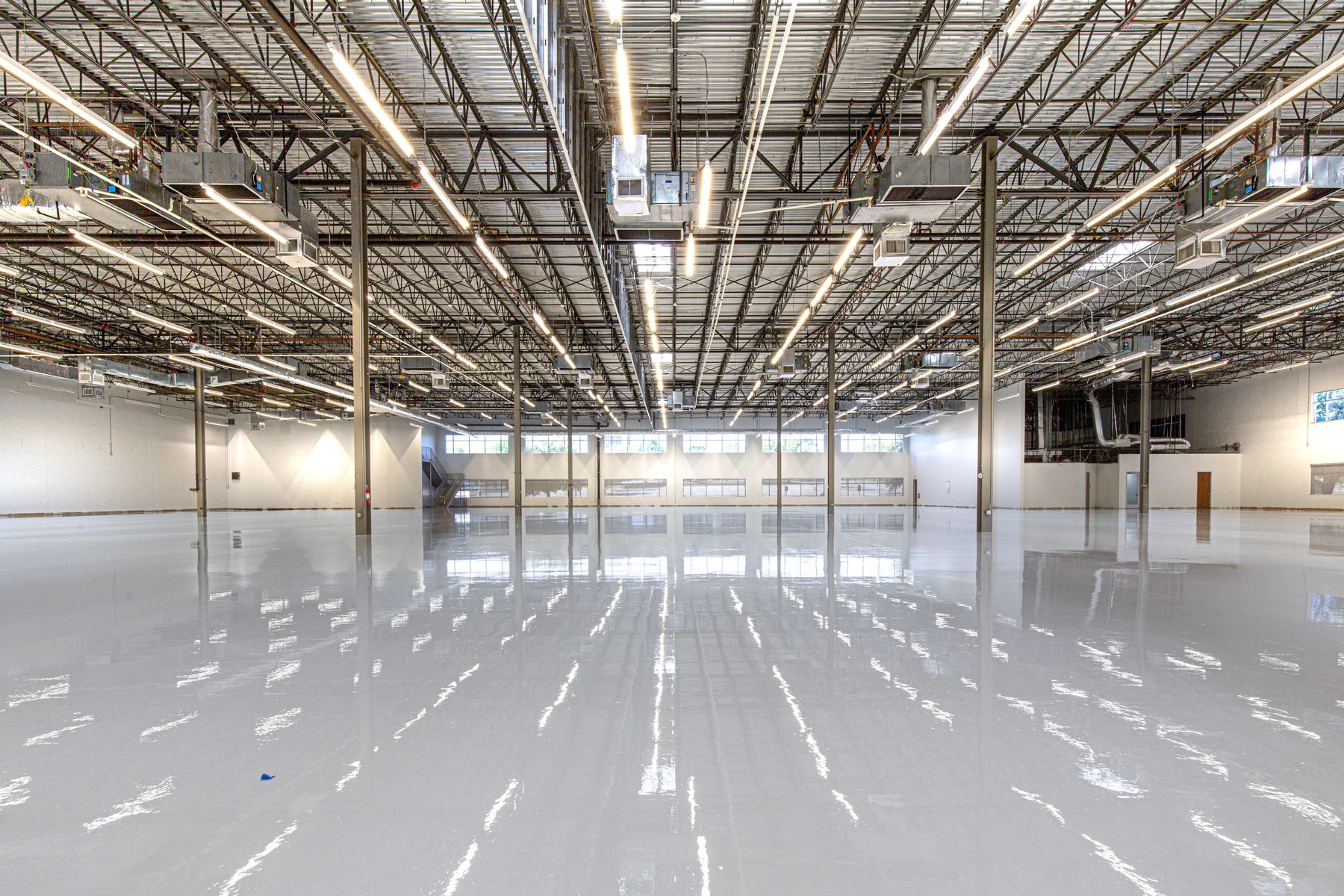
Floor shown is a visualisation — stock reference photography, not a completed Ironclad job.
Search "epoxy flooring Melbourne" and you get everything from a tin of hardware-store floor paint to a burnished industrial topping. What we install is a flake system: a pigmented resin base coat on mechanically prepared concrete, decorative vinyl flake broadcast to refusal — meaning the floor takes flake until it physically cannot hold any more — and a clear topcoat over it all, with the edges cut in sharp. It is the finish you see in the showroom-style garages: textured, seamless, cleanable with a hose and a broom.
The flake is not just cosmetic. Full-coverage broadcast adds film build and gives the surface real grip when it is wet, which a smooth roll-coated floor does not have. It also hides the tyre dust and drips a plain colour shows within a week. Six blends, from charcoal through sandstone — see them on the same garage here.
The same system goes down in workshops, sheds and warehouses across Melbourne. A power-floated commercial slab is one of the hardest surfaces to bond to, which is why the preparation matters more than the product — more on that below.
Singles, doubles and tandems. Two days on site, car back on the floor three to four days later, gear moved and put back.
Flake or plain colour, specced for what actually happens in the space — benches, hoists, bikes, dropped tools.
Commercial slabs staged bay by bay so you keep trading. Line marking and demarcation included in the plan, not bolted on.
Same four stages on every Melbourne job, residential or commercial. No shortcuts, because we're the ones carrying the guarantee.
Diamond-ground back to bare, open concrete. Not acid-etched, not rolled over. Dust-extracted, so the garage stays clean.
Moisture tested before a drop goes down. Cracks and joints are cut out and filled so they don't telegraph through the finish.
Pigmented base coat, then decorative flake broadcast to refusal for full coverage, grip and depth. Your colour, chosen before we arrive.
Clear coat over the top, edges cut in sharp, site cleaned. You get the guarantee in writing before we leave.
Two days on site. Walk on it after 24 hours, car back on it in three to four days. Gear moved and put back — you don't lift a thing. Written guarantee against lifting, and it transfers if you sell.
Melbourne is not one slab. The west and much of the north sit on the basalt plains, where the clays are commonly reactive and slabs live with seasonal movement. Much of the south-east sits on the sand belt, which drains and behaves differently. And the age of the house matters more than the postcode: an under-slab vapour barrier only became a prescriptive national requirement with the 1996 Building Code, adopted in Victoria in August 1997 — so plenty of older Melbourne slabs were poured without an intact one, and moisture travels up through them.
None of that stops a floor being coated. What it changes is the preparation, and preparation is where cheap floors fail. The three failures we see over and over across Melbourne: the coating was rolled onto a sealed or acid-etched slab instead of a ground one; the slab was never moisture tested and hydrostatic pressure pushed the film off in sheets; or the film build was cut to make the quote cheaper. All three look identical on day one. We wrote up the full failure mechanics — and how to check any installer's quote against them — in Why epoxy floors fail.
The other question Melbourne owners ask is how long it takes. We quote two days on site, and we put the return-to-service times in writing rather than say them on a call. Where installers differ most is the topcoat chemistry, and what that does to how soon you can park on it — explained plainly in Epoxy vs polyaspartic.
Four things decide what a Melbourne epoxy floor costs: the square metreage, what is on the slab now (bare concrete grinds fast; failing paint or an old epoxy has to be stripped off first), the repairs the slab needs before coating, and the system going down on top. That is why we quote from a photo instead of publishing one number that would be wrong for half the garages in Melbourne.
If you want to understand the market ranges and the questions that expose a cheap quote before you sign it, read the Melbourne epoxy flooring cost guide. For your actual number: one photo and rough dimensions gets you a written quote in under 15 minutes, weekdays 7am–7pm. Fixed before we start — the number on the quote is the number you pay.
It depends on the square metreage, what is on the slab now, and what has to come off it. Across the Melbourne market, installed flake systems are commonly quoted per square metre, with removal of old coatings and slab repairs on top. Our cost guide covers the ranges and what moves them. For your actual number: send one photo and rough dimensions and you get a written quote back in under 15 minutes, weekdays 7am–7pm.
A standard double garage is two days on site: grind, repairs, moisture test, base coat, flake broadcast to refusal, then the clear topcoat. You walk on it 24 hours after the final coat and the car is back on it three to four days later. Those times go in writing on your quote, and they are worth asking of anyone who quotes you.
All of metropolitan Melbourne, plus Geelong and regional towns within a day's reach. The suburbs we are in most often have their own pages — see the full list below, or every area we cover. Anywhere else in Victoria, send a photo and we'll tell you straight.
Yes, provided the system is built properly. Hot-tyre pickup — the coating letting go where a warm tyre sits — is a preparation and film-build failure, not a Melbourne problem. Cold weather affects cure times, not the finished floor: in winter the cure window shifts, and we tell you at quote stage if that changes your timing.
Usually the honest answer is no. If the existing coating is lifting, anything applied over it fails with it. We grind the old film off and take the slab back to bare, open concrete — that is what the written guarantee against lifting is written against.
For a garage, flake gives you texture underfoot so it isn't slippery wet, a surface that hides tyre marks and dust, and extra film build. Polished concrete is a different product — the slab itself ground and densified — and it is not what we install. We do flake systems and we'll say so, rather than pretend to be all things.
No. We move your gear and put it back — you don't lift a thing. Shelving and anything fixed to the walls stays where it is and gets sheeted over.
More general questions are answered on the main FAQ.
Every page below covers what we actually find on the ground there — the age of the slabs, the garages, the access. They're not the same page with the name swapped.
One photo and rough dimensions is all we need to give you a real number — no site visit required. Written quote back in under 15 minutes, weekdays 7am–7pm.
Get my price →