
Sunshine covers an unusually wide span of slab — a detached rear garage poured in the 1950s on one street, a townhouse handed over last year on the next. The quote depends entirely on which one you have.
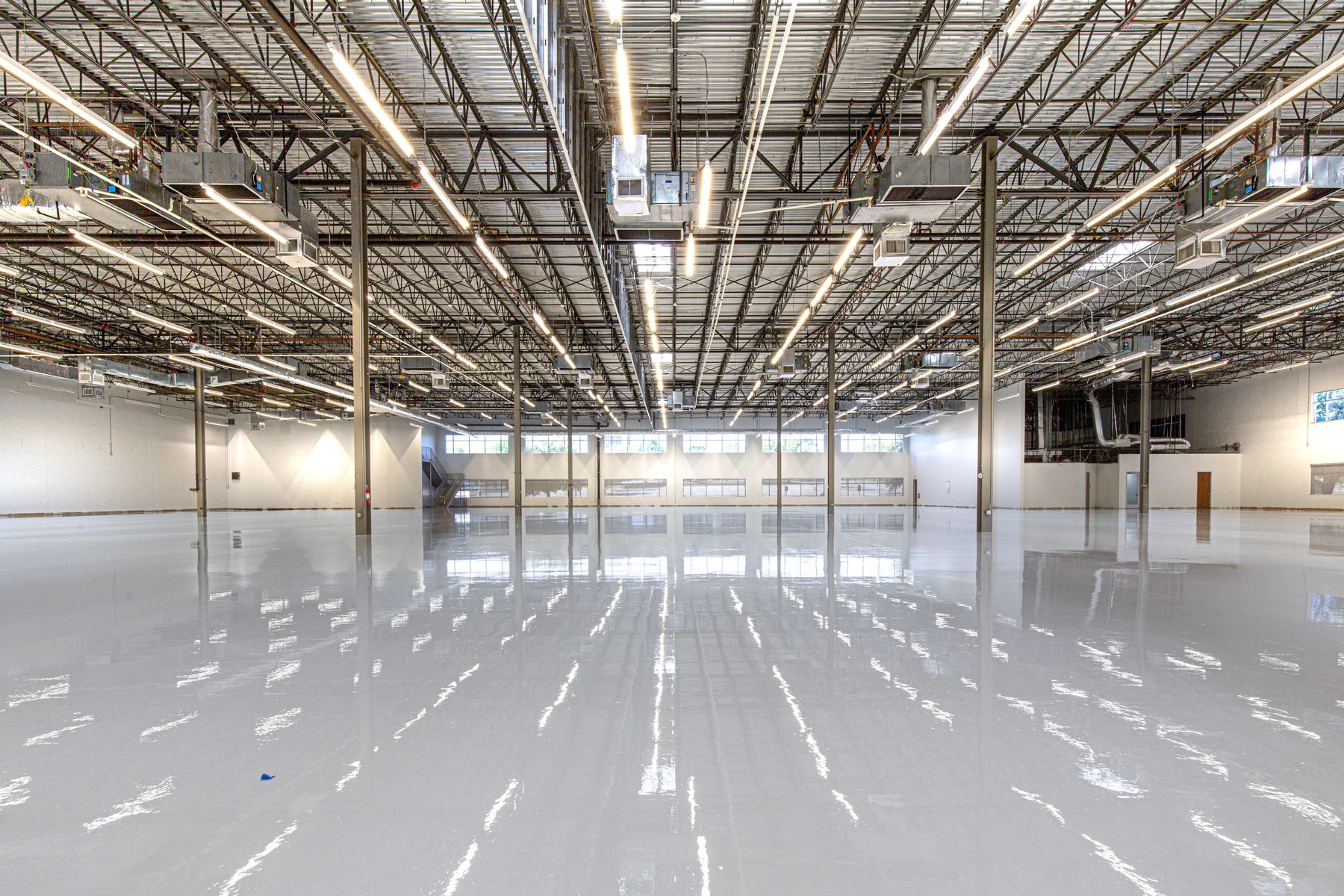
Floor shown is a visualisation — stock reference photography, not a completed Ironclad job.
Sunshine's older housing came in two distinct waves. The 1920s brought War Service Homes and State Savings Bank housing, mostly double-fronted or bungalow style on medium to large allotments. Then the post-war boom: 1,200 houses added in 1951 alone onto a stock of about five thousand, British prefabs shipped in, and the population going from 22,000 in 1951 to over 62,000 by 1961. The garage on a house from either wave is usually detached, at the back of a long driveway, on a slab poured well after the house itself.
Those rear slabs are the ones to be careful with. They are commonly thin, frequently unreinforced, sometimes poured in two sections with a cold joint through the middle, and laid decades before an under-slab vapour barrier became a prescriptive requirement — that only arrived with the 1996 Building Code, adopted in Victoria in August 1997. Moisture rising through a slab like that will lift a coating off no matter how well it was applied, so the moisture test is not a formality in Sunshine. It is the test that decides whether we quote the job at all.
The second Sunshine is the redevelopment. Only about two thirds of dwellings here are separate houses now and better than a quarter are medium density, so plenty of what we look at is a modern townhouse bay — single or tandem, under living space, on a young slab with the same curing question as any new build. Worth saying plainly: fewer than two in five Sunshine households run two or more cars, so the standard double-garage assumption often doesn't apply here.
And in both cases there is oil. Sunshine garages have often been working garages for sixty years, in a suburb built around the Harvester works and the factories that followed it. Oil soaked into concrete stops a coating bonding and can bleed back through the finish, so contamination gets dealt with in preparation rather than covered up.
1920s and 1950s in the original stock; brand new in the townhouse developments.
Detached single lock-up at the rear, around 16–20 m² — or a modern tandem bay under a townhouse.
A thin, unreinforced rear slab with no membrane, decades of oil, and a long driveway between it and the truck.
Same four stages on every job in Sunshine, residential or commercial. No shortcuts, because we're the ones carrying the guarantee.
Diamond-ground back to bare, open concrete. Not acid-etched, not rolled over. Dust-extracted, so the garage stays clean.
Moisture tested before a drop goes down. Cracks and joints are cut out and filled so they don't telegraph through the finish.
Pigmented base coat, then decorative flake broadcast to refusal for full coverage, grip and depth. Your colour, chosen before we arrive.
Clear coat over the top, edges cut in sharp, site cleaned. You get the guarantee in writing before we leave.
One day on site. Walk on it after 24 hours, car back on it at 48. Gear moved and put back — you don't lift a thing. Written guarantee against lifting, and it transfers if you sell.
This is the thing that actually shapes a Sunshine job. A detached garage at the back of a deep block means the truck sits on the street and everything — grinder, extractor, hoses, materials, waste — gets moved up and down a long, often narrow driveway. It is doable and we do it regularly, but it is real time and it belongs in the quote rather than being discovered on the day.
Power is the companion problem. A detached garage of that era might have a single outlet on a lead run from the house, or no supply at all. Tell us what is there and we bring our own.
If you are in a newer townhouse instead, the constraint flips — the garage is easy to reach but there is nowhere to park and the bay is often under living space, so dust and odour control matter more. Either way, a photo of the approach as well as the floor makes the quote far more accurate.
Possibly not, and we will tell you straight. Old detached slabs in Sunshine were poured long before an under-slab vapour barrier was required, and if moisture is rising through the concrete it will push a coating off regardless of prep. We moisture test before committing. If the reading rules it out, you get that answer instead of a floor that fails in a year.
Yes — we do it regularly in Sunshine. The grinder and extractor are wheeled in. What we ask is that you mention the approach when you send your photo, and ideally photograph the driveway too, because it affects the time on site and we would rather price it accurately than surprise either of us.
Mostly. Diamond grinding removes the top of the slab and takes the bulk of the contamination with it. Deeper soaking gets treated separately before coating. We would rather look at a photo and give you a realistic answer than promise a perfect result on a floor we haven't seen.
More general questions are answered on the main FAQ, and Melbourne-wide answers — cost, systems, timing — live on the epoxy flooring Melbourne page.
One photo and rough dimensions is all we need to give you a real number — no site visit required. Quotes weekdays 7am–7pm.
Get my price →