
Craigieburn is really two suburbs sharing a name: the older township built out from the 1970s, and the estates — Highlands, Aston and the newer stages around them — that have carried most of the growth since the 2000s. The slabs are different, and so is the job.
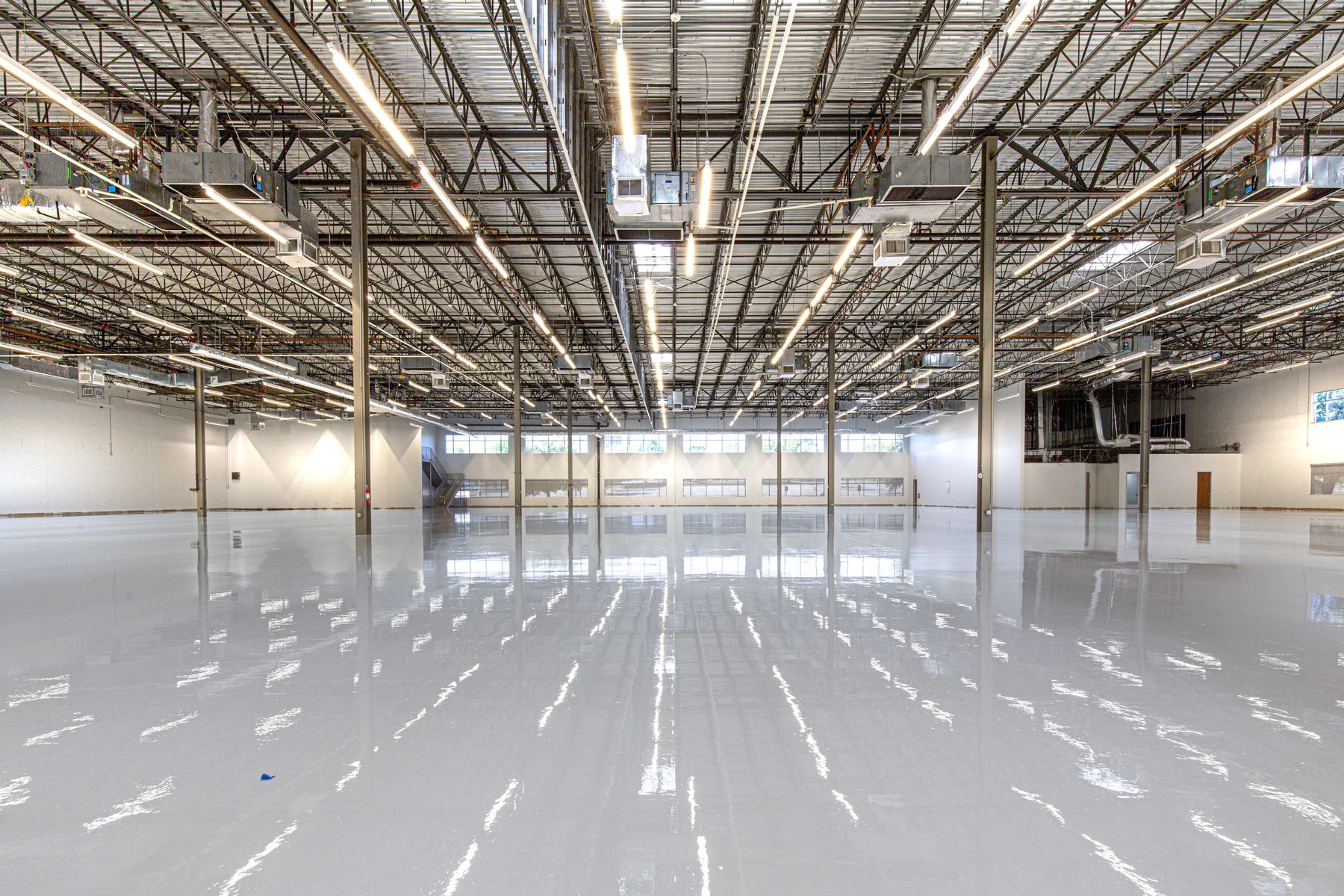
Floor shown is a visualisation — stock reference photography, not a completed Ironclad job.
The whole of Craigieburn sits on Melbourne's northern basalt plain, and the clays over that basalt are commonly reactive — Hume sits alongside Wyndham, Melton and Whittlesea in the growth corridors where slab movement on reactive clay is a live, documented issue rather than a scare story. As always, your own lot's classification comes from a soil test on that lot, not from the suburb name.
What changes across Craigieburn is age. The older streets between the town centre and the rail line date from the 1970s and 1980s, which puts them before the under-slab vapour barrier became a prescriptive requirement — that arrived with the 1996 Building Code, adopted in Victoria in August 1997. Older Craigieburn garages get the same treatment as older Werribee ones: a real moisture reading before anyone promises anything, and old floor paint ground off rather than coated over.
The estate half is the opposite problem. A Highlands or Aston slab is usually sound, dry and well built — but it may also be young, and new concrete needs to finish curing before it takes a coating. Manufacturers typically want at least 28 days, and the moisture test has the final say. If your home is a recent handover, dig out the slab pour date before you send your photo — it is the one fact that decides your timing.
1970s–1990s in the older township; post-2005 in the estates, and often only months old in the newest stages.
Modern double around 36 m² in the estates; smaller singles and carport conversions in the older streets.
Either a raw builder's slab still curing, or forty years of paint, oil and patch repairs to grind off.
Same four stages on every job in Craigieburn, residential or commercial. No shortcuts, because we're the ones carrying the guarantee.
Diamond-ground back to bare, open concrete. Not acid-etched, not rolled over. Dust-extracted, so the garage stays clean.
Moisture tested before a drop goes down. Cracks and joints are cut out and filled so they don't telegraph through the finish.
Pigmented base coat, then decorative flake broadcast to refusal for full coverage, grip and depth. Your colour, chosen before we arrive.
Clear coat over the top, edges cut in sharp, site cleaned. You get the guarantee in writing before we leave.
One day on site. Walk on it after 24 hours, car back on it at 48. Gear moved and put back — you don't lift a thing. Written guarantee against lifting, and it transfers if you sell.
Craigieburn is a straightforward run up the Hume for us, and scheduling is rarely the hard part. The estate caveats are the usual ones — narrow streets, tight courts and limited kerb space in the newer stages, so we plan where the truck and the dust extractor sit before the day.
In the older township, power is the thing to flag: a 1970s garage commonly has one 10-amp outlet on a shared circuit, and a grinder plus a vacuum will trip it. Tell us at quote stage and we bring our own supply.
It depends on when the slab was poured, not when you got the keys. New concrete is generally left at least 28 days before coating, with the product data sheet having the final say — and we moisture test to confirm rather than guessing from the calendar. Tell us the pour date and you get a straight answer on timing.
A resin floor is a few millimetres of surface — it bonds to the slab, it doesn't restrain it. Cracks and control joints are cut out, filled and treated in preparation so they don't telegraph through the finish, and the written guarantee against lifting covers the coating staying bonded to the concrete. Anyone promising their product will hold a moving slab together is selling you something.
No — if the old film is letting go, anything over it goes with it. It gets ground off, the slab goes back to bare open concrete, it gets moisture tested, then coated. That is what the guarantee is written against.
More general questions are answered on the main FAQ, and Melbourne-wide answers — cost, systems, timing — live on the epoxy flooring Melbourne page.
One photo and rough dimensions is all we need to give you a real number — no site visit required. Quotes weekdays 7am–7pm.
Get my price →